
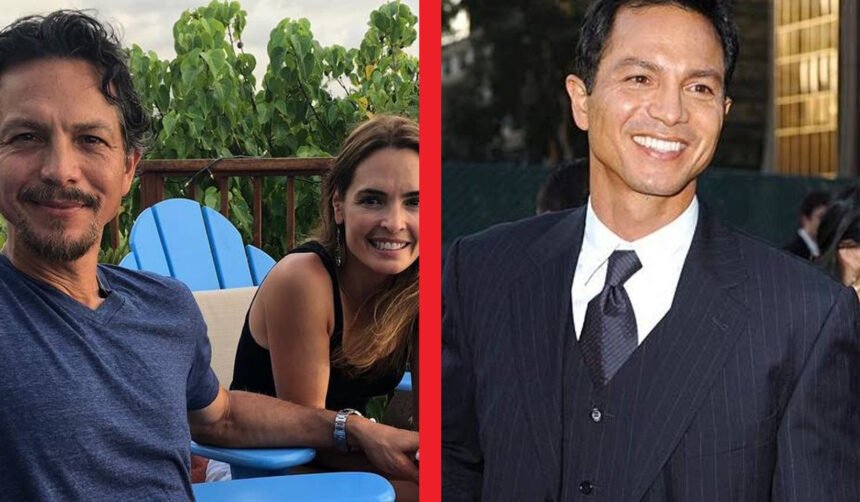
Eldy Banda is a Peruvian-born nurse and political activist of Quechua descent, and she is best known as the mother of actor Benjamin Bratt and filmmaker Peter Bratt. She was born in Lima, built a life in San Francisco, and worked as a nurse while she raised five children. In November 1969, she took those children to Alcatraz Island to join the Native American occupation, a moment that shaped how her sons later spoke about activism.
Most coverage of Eldy Banda treats her as a footnote in her famous son’s biography. That undersells her. Reliable sources describe a woman who organized, marched, and cared for patients, and who passed a strong sense of identity and justice to her family. This article collects what Wikipedia, the Associated Press, the San Francisco Chronicle, and university and film sources say about her, and it marks clearly where the public record runs thin.
Eldy Banda at a Glance
Eldy Banda was a nurse and community activist who was born in Lima, Peru, and who raised her family in San Francisco. The table below gathers the facts that reliable sources confirm. Where sources disagree or stay silent, the table says so instead of guessing.
| Detail | Information |
|---|---|
| Full name | Eldy Banda (known as Eldy Bratt after marriage) |
| Birthplace | Lima, Peru |
| Date of birth | Not confirmed by reliable sources |
| Ethnic background | Quechua (Indigenous Peruvian) |
| Profession | Registered nurse |
| Known for | Native rights activism and raising Benjamin and Peter Bratt |
| Spouse | Peter Bratt Sr., a sheet metal worker (the couple had separated by 1969) |
| Children | Five, including actor Benjamin Bratt and filmmaker Peter Bratt |
| Home base | San Francisco, California (a house in Glen Park served as an organizing hub in 1969) |
| Moved to the United States | Sources disagree on her age, with figures between 9 and 14 |
| Key events | 1969 to 1971 Alcatraz occupation, the Wounded Knee standoff, and the farm workers movement |
| Public profile | Rarely seen in public, mostly through her sons’ interviews and films |
Two details stand out in this summary. First, her activism and her nursing career ran side by side, so she served her community both at work and in the streets. Second, her influence reaches the public mainly through her children, which explains why most written records of her life appear inside stories about Benjamin and Peter Bratt.
Notice what the table leaves out. Eldy Banda has never courted publicity, so you will not find an official biography, a verified birth date, or a first-person memoir. Several low-quality websites fill that gap with invented details. This article sticks to claims that major outlets and institutions support.
Early Life and Quechua Roots
Eldy Banda grew up with Quechua ancestry after her birth in Lima, the capital of Peru. Wikipedia lists her as a descendant of the Quechua people, and her sons repeat the same heritage in interviews and official biographies. Her identity shaped how she raised her children later in California.
The Quechua are one of the largest Indigenous groups in the Americas. They trace their history to the Andes and to the Inca Empire, and millions of people still speak Quechua across Peru, Bolivia, Ecuador, and neighboring countries. Many Quechua families migrated to Lima during the twentieth century, searching for work and schooling, and they often met discrimination in the city.
Sources do not agree on when Eldy left Peru. Wikipedia says she moved to the United States with her family at age 14, while other profiles of Benjamin Bratt say she arrived at age nine. Because no primary document settles the question, it makes sense to say only that she arrived as a girl and grew up in the United States.
What the sources do agree on is the result. Eldy carried her Peruvian and Indigenous identity into adulthood, and her children absorbed it. Benjamin Bratt grew up fluent in Spanish and often speaks about his Peruvian roots. Peter Bratt’s speaker biography describes him as raised in San Francisco by a strong Indigenous single mother from Peru.
From Peru to San Francisco and a Nursing Career
Eldy Banda built her working life as a nurse in the San Francisco Bay Area. Wikipedia calls her a nurse and political activist, and the San Francisco Film Festival describes her as a registered nurse and political organizer. Those two roles defined her adult life.
Nursing gave her steady work and close contact with the health needs of her community. Her sons later took up related causes. Benjamin Bratt serves on the board of the Native American Health Center in the Bay Area, and he has supported the Friendship House Association of American Indians for years.
She married Peter Bratt Sr., a sheet metal worker of English, German, and Austrian ancestry. The couple had five children, and by the time of the Alcatraz occupation they had separated. The San Francisco Chronicle notes that her parents had just broken up when the occupation began, which left Eldy responsible for the household.
San Francisco in the 1960s gave her plenty to work with. The city hosted a growing urban Indian community, because federal relocation programs had moved many Native families from reservations to cities like San Francisco, Oakland, and Los Angeles. Organizations such as Friendship House gave those families a place to gather, and activists like Eldy found allies there.
Eldy Banda and the Occupation of Alcatraz
Eldy Banda joined the Native American occupation of Alcatraz in 1969 and took her children with her. The occupation began on November 20, 1969, when a group calling itself Indians of All Tribes landed on the abandoned federal prison island in San Francisco Bay. An earlier, shorter landing took place on November 9.
The Associated Press describes the moment through her family’s eyes. On a chilly November night in 1969, a seven-year-old Peter Bratt, his four siblings, and their mother left their San Francisco home for the pier. An AP photograph from March 26, 1970, shows Eldy Bratt walking down a cell block on Alcatraz with her son Peter and one of her daughters.
Benjamin Bratt was six years old at the time. California State University, which awarded him an honorary degree, states that his activism for Native American rights began when his Peruvian mother took him and his siblings to the occupation. Benjamin has since narrated a documentary about Alcatraz, and he has recalled details such as the buzz of a generator on the island.
Her home also played a role. According to the San Francisco Chronicle, Eldy’s small house in the Glen Park neighborhood became the de facto headquarters on the mainland, and people came from all over the country. She did not only visit the island. She also opened her home to the movement.
The occupation lasted about 19 months and ended in June 1971. Historians credit it with drawing national attention to Native American rights and with helping push the federal government toward policies of tribal self-determination. Eldy Banda was one of the many participants who made that attention possible.
Wounded Knee and the Farm Workers Movement
Alcatraz was not the end of her activism. According to the University of California, Santa Cruz, Eldy Banda took part in several movements during the 1960s and 1970s, including the Alcatraz occupation, the Wounded Knee standoff, and the farm workers movement. Her sons’ biographies repeat that list.
The Wounded Knee standoff began in February 1973 on the Pine Ridge Reservation in South Dakota. Members of the American Indian Movement and local Oglala Lakota activists held the town for 71 days. The event became one of the best-known Native protests of the twentieth century, and it drew supporters from across the country.
The farm workers movement carried a different goal. Led by Dolores Huerta and Cesar Chavez, the United Farm Workers fought for better pay and safer conditions for field laborers, many of them Latino immigrants. Peter Bratt’s UC Santa Cruz profile says Dolores Huerta played a part in his life from childhood, which shows how closely the Bratt family stayed tied to that cause.
These movements share a common thread: they asked ordinary people to stand up for communities that lacked political power. Eldy Banda did not hold a public office or lead a national organization. She worked at the level where most social change begins, by showing up, hosting, feeding people, and bringing her children along.
Raising Five Children as a Single Mother
Eldy Banda raised her five children largely on her own after her marriage ended. Peter Bratt’s speaker profile describes her as a strong Indigenous single mother. She worked as a nurse, ran a busy household, and stayed active in her community.
The children grew up close to community organizing, and several of them went on to careers built on storytelling and service. Peter Bratt has said his family took part in Alcatraz, Wounded Knee, and the farm workers movement, so activism was part of ordinary family life.
She also taught her children to take pride in their heritage. They learned that their identity linked them to Peru, to the Quechua people, and to the wider Native struggle in the United States. That lesson shows up in nearly every interview Benjamin and Peter give about their upbringing.
The family stayed close as the children grew up. Benjamin has said he left his television career in 1999 partly because he wanted to be home with his own family, a priority that echoes the values he learned from his mother. Eldy herself rarely seeks attention.
Her Influence on Benjamin Bratt
Eldy Banda shaped Benjamin Bratt’s career choices and public causes more than any other person in his life. Benjamin was born on December 16, 1963, in San Francisco, and he was the third of five children. He studied at Lowell High School, earned a fine arts degree at the University of California, Santa Barbara, and trained at the American Conservatory Theater.
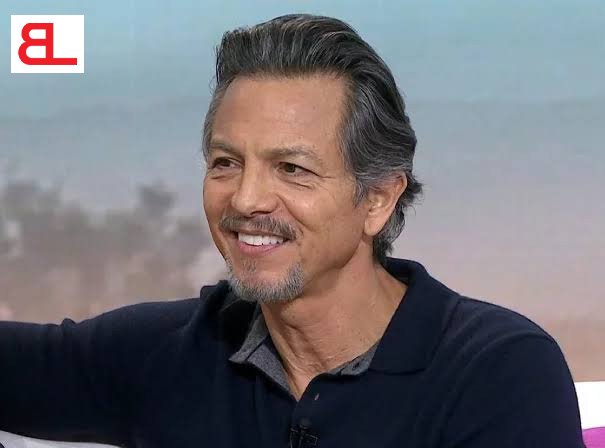
He became famous as Detective Rey Curtis on Law & Order, a role he played from 1995 to 1999. Earlier, he drew attention in the 1993 film Blood In Blood Out, and later he appeared in Miss Congeniality and voiced characters in animated films. Through all of it, he kept returning to Indigenous and Latino stories.
His causes reflect his mother’s example. He supports the American Indian College Fund, narrated the PBS series We Shall Remain, and serves on the boards of the Friendship House Association of American Indians and the Native American Health Center. Each of these groups serves the same community that gathered at his mother’s house in 1969.
Official biographies trace his activism to the night his mother took him to Alcatraz at age six. That early experience set the direction for much of his later advocacy.
Her Influence on Peter Bratt and the Bratt Family Legacy
Eldy Banda also shaped the work of her son Peter Bratt, an award-winning filmmaker. Peter wrote and directed Follow Me Home, which premiered at the 1996 Sundance Film Festival, and he directed La Mission in 2009 with Benjamin in the lead role. Both films draw on the San Francisco neighborhoods where the family lived.
His best-known work is Dolores, a 2017 documentary about labor leader Dolores Huerta. Guitarist Carlos Santana served as executive producer, and the film earned a Critics Choice Documentary Award. Peter now speaks at universities about independent filmmaking and about telling stories that mainstream media overlooks.
Peter also leads The Village SF, a project formed by a coalition of Native American organizations to provide services in the Bay Area. UC Santa Cruz named him its 2023 alumni award recipient for social sciences, and its announcement notes that his mother was an organizer who took part in Alcatraz, Wounded Knee, and the farm workers movement.
Together, the brothers continue a family tradition of using art and service for the same goals their mother pursued through organizing. The San Francisco Chronicle even reported that Peter had long hoped to bring the story of the Alcatraz occupation to the big screen, with Benjamin in a leading role.
Why Her Story Matters and What We Still Don’t Know
Eldy Banda matters because her life shows how family, work, and activism connect. She did not seek fame, yet her choices reached into film, health care, and Native advocacy through her children and the communities they serve. That reach makes her a useful example for anyone who studies grassroots movements.
At the same time, honesty requires admitting what remains unknown. Reliable sources do not give her birth date, her full educational history, or the details of her nursing career. They also disagree about when she left Peru. Readers should treat any website that supplies exact dates or private details without citing a source with caution.
Her privacy deserves respect. Eldy is a private citizen who became publicly visible mainly through her sons and through photographs of the Alcatraz occupation. Writers who cover her should stay with what she and her family have chosen to share, and they should avoid speculation about her health, finances, or personal relationships.
If more verified information appears, such as a documentary interview or an archival record, the picture of her life will grow richer. For now, the record that exists already makes the case that she deserves to be known for her own work, not only as someone’s mother.
Conclusion
Eldy Banda was a Peruvian-born Quechua nurse and activist who raised five children in San Francisco and brought them to the Alcatraz occupation in 1969. Her example shaped Benjamin Bratt’s causes and Peter Bratt’s films. Though she avoids the spotlight, her legacy lives in the Native and Latino communities her family still serves.
Frequently Asked Questions
Who is Eldy Banda?
Eldy Banda is a Peruvian-born nurse and activist of Quechua descent. She is best known as the mother of actor Benjamin Bratt and filmmaker Peter Bratt. She raised five children in San Francisco and took part in the 1969 Native American occupation of Alcatraz Island with her family.
Where was Eldy Banda born?
Eldy Banda was born in Lima, Peru, and she has Quechua ancestry. Sources disagree on her age when she moved to the United States, with Wikipedia saying 14 and other profiles saying nine. She grew up in the United States and later settled in San Francisco, where she raised her children.
What did Eldy Banda do for a living?
Eldy Banda worked as a nurse. Wikipedia describes her as a nurse and political activist, and the San Francisco Film Festival calls her a registered nurse and political organizer. She balanced nursing with community activism and raised five children, largely on her own after her marriage to Peter Bratt Sr. ended.
How is Eldy Banda connected to the Alcatraz occupation?
Eldy Banda took her children to Alcatraz Island in 1969 to join the Native American occupation. The Associated Press describes the family leaving for the pier in November 1969, and the San Francisco Chronicle reports that her Glen Park home served as a mainland headquarters for supporters traveling in from across the country.
How many children does Eldy Banda have?
Eldy Banda has five children. Two of them are public figures: actor Benjamin Bratt, born in 1963, and filmmaker Peter Bratt, who directed Dolores and La Mission. Reliable sources do not publish the names of her other children, so this article respects their privacy and leaves them out.